Sunday, February 03, 2008

National Baseball Hall of Fame Photo Essay


Just for fun--Sohna and I wanted to post up some of our photos from our recent visit to The National Baseball Hall of Fame and Museum in Cooperstown, New York. There will be little commentary, but if you click on some of the pictures--they will expand to full size jpegs. At that point--you will be able to read a few descriptions in many of the display cases. Hopefully, this essay will encourage you to visit The Hall for the first time--or make a return journey. THE HALL OF FAME IS SO MUCH BETTER IN PERSON.

First Up: Exterior Overview--including Statues located in the East Pavilion (Satchel Paige, Dottie Schroeder, Johnny Podres & Roy Campanella).


Moving Inside--The Main Entrance


The "Holy Cow"--in Phil Rizzuto's Honor and 2007 Induction Cases of Cal Ripken, Jr & Tony Gwynn.


The Frank & Peggy Steele Art Gallery (The Art of Baseball)


The Broadcasters/Baseball Writers/Press Wing of The Hall of Fame


Baseball At The Movies


The Kids Area & Award Winning Photos


And of course--Those Honored in The Baseball Hall Of Fame Gallery with their Plaques.


So--That's just the EXTERIORS & FIRST FLOOR. Tommorrow--on to The Second Floor

Photos--Property of Nats320--all rights reserved

Saturday, February 02, 2008

The Final Words With A Hall of Fame Curator


Over the past few days, John Odell--The Director of History and Research at The National Baseball Hall of Fame--has described his role, The Hall's task; and the ever expanding position which the Sports Memorabilia Market has played in determining the long term growth of Baseball's Shrine. To reset the scene--Mr. Odell is chatting with Sohna and I in the A. Bartlett Giamatti Library. And in today's final chapter--we pick up with John discussing one of his favorite newer exhibits currently on display at the Cooperstown based museum.

On our tour the other day, you mentioned how rewarded you felt when noticing a Father and Son proudly standing in front of The Seattle Mariners Team Display on the third level of The Hall. At that very moment—you knew this particular exhibit would be a hit. (SBF)
“Yes. We have our Today’s Game Locker Room—which is composed of three different elements. One is a temporary exhibit, which is thematic--right now its 3000 Strikeouts, 3000 Hits—pitchers that threw 3000 Strikeouts in their careers and batters that stroked 3000 hits. That exhibit changes every year or every other year.


In the middle of the room, we have a ‘This Year In Baseball’ display covering all the artifacts we have obtained throughout the course of the year in baseball. Those items go in that location and there is no rhyme or reason in those displays. One of the great thrills we have is to be able to display those unique things right away. Let’s say a batter hits four home runs in a game on a Sunday and the very next Sunday the bat has come to Cooperstown, been processed, photographed and mounted on display. That is, if we are lucky—Sunday through Sunday (chuckling).”


But, the biggest part of that room (The Locker Room) is a series of 30 Lockers that surround the entire area. Each locker containing artifacts from that team’s past ten years of baseball history. This is an upgrade from another concept where we had just replica jerseys on display—in a different location. What we have now is a lot more meaningful. What this room shows is that EVERY MAJOR LEAGUE TEAM contributes to baseball history, to a greater or lesser extent. It is not just the World Series Winners that are creating baseball history. Every single club has its own history and it may not be as storied as that of, for right now, The Boston Red Sox. They are a tremendously hot team and done well of late. They have good ownership. They’ve got good management. They’ve got good players. They’ve got good chemistry—all the stars are aligning for that club right now—and good for them. But, it takes another 29 teams to help create baseball's history. If The Red Sox were the only team—they would have no one to play (all of us chuckling)."

"So, shortly after we first opened up this exhibit—I was just checking on everything and walking through—enjoying the space and ambiance. I saw a little boy, who was probably 7 or 8 years old. He wasn’t very old. Standing ramrod at attention—he had The Seattle Mariners Cap on—standing right next to The Seattle Mariners Locker. And his dad was on his knees taking pictures. Well, there is no other Seattle Mariner stuff on (public) display currently. That is the place for it, Seattle’s Nine Square Feet of history at The Hall of Fame. But, that was their spot. They had come out from Seattle, presumably to see The Hall of Fame. Here was their space, their spot. I will never forget that kid’s smile. I knew then--that The Locker Room Exhibit would be a big hit.” (Sohna and I clearly noticed how touched Mr. Odell was in speaking of this moment)

“Every other fan has their own spot in The Locker Room, also—even if their team is not doing well on the field. A part of their recent history is there. It may not be much, but ‘it’s ours’ (as that fan might say)—and that’s important. I am VERY PROUD of that exhibit.”

Sohna and I did the exact same thing for The Nationals Locker--we wanted to see it right away. (SBF).

(as a side note from the other day--Chad Cordero's Montreal Expos Cap and Picture is in The Washington Nationals Locker at The Hall for being the very last person to throw a pitch for The Expos--in Montreal, Quebec Canada).


But, if a player has been traded that's depicted in that team’s locker—what happens then? (The African Queen)

“The artifacts that are in their original locker stay there. When a player has an historic event—that’s the team the player had the historic event with. The artifact does not travel with the player as he travels around the league. There was a time and a place for that event—it’s a part of the team’s history from our perspective—not the player’s history. And this is going to go on more and more—as players move around—to make the tracking monumentally difficult. Think about this--when he retired, where would the artifact go? The team where he was last—not the team he made the historic event? A Player travels from Team A to B, to C to D, then retires. We made a decision early on—there is a player team linkage on the event—that is what we document. It’s consistent and works out well for us. It does not satisfy fans who say ‘this guy retired a long time ago—why is his artifact still in there? He’s old news.’ If he was with that team sometime over the past 10 years, we are going to keep it in there. Or, this player has gone over to play for another team."

Like your Johnny Damon story. (SBF)

“Yes, he was a World Series Hero and now he is no longer with Boston and should not his World Series Artifacts go over to The Yankees? The answer is no. NO. He was with the Red Sox when he accomplished the feat--simple as that--the history doesn't change when any player switches teams.” (On our tour of The Hall—while standing in front of The Red Sox Locker—John recalled the many Boston Fans that come to Cooperstown and DEMAND that Johnny Damon’s World Series Home Run Bat—be removed from the case—‘He’s a Traitor’ they yell (now playing for The Yankees--his personal expression describing the scene was quite funny--a highlight of our time at The Hall.) We LEAVE IT THERE!!" (Rounds of laughter)

Speaking of players—Sohna and I were surprised to learn that not many modern day players actually come here to visit? (SBF)
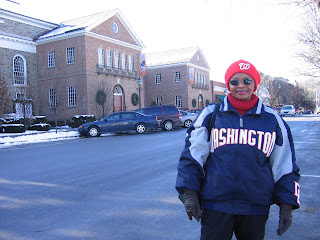
“No, they don’t. I think they would come here more often if we were located in New York City. But, we are 4 and ½ Hours from New York City. We are not easy to get to, never will be easy to get to. We are not on the way between here and there. Unfortunately, the visiting of players is not something that happens. During the season, and you guys know this as well as anybody, how extraordinary the schedule is. Then, when it’s not the season—November through January—the players are living with their families and they don’t get the chance to come up here. I think many of the players are focused on their careers right now. Few of them are like Ichiro. He has visited here several times. HE LOVES BASEBALL HISTORY. He has been very generous to The Baseball Hall of Fame and likes coming here. He finds it fun to come visit The Baseball Hall of Fame.” (Sohna and I were very touched to hear this remark--that a Superstar Player WANTED to see everything about the history of the Great Game he plays. We only wish more were like him)

“But most players are not like Ichiro. We do get a lot more retired players that visit. Many times they claim they always wanted to—but now they have the time.”

“Also, I don’t think in my years here, we have ever had a player show up that was in the process of being elected to The Hall of Fame. That’s a little bit of an exaggeration, but they don’t wish to be presumptuous. ‘Oh yeah, I am just going to check out my spot!!’ (Everyone busting out laughing). There is a modesty that goes along with everything.”

Speaking of The Hall of Fame inductees—how much preparation goes into putting on the weekend? (The African Queen)

“That is HUGE!! A lot of time, effort and energy go into running induction weekend. I am a very tiny cog in setting up things and taking down things. It’s a major event that always takes place during the last Sunday in July.”

And where the Cal Ripken and Tony Gwynn displays are right now—those will change for the 2008 honorees? (The African Queen)


“Yes, those Ripken and Gwynn artifacts will be rotated out and ‘Goose’ Gossage artifacts will be put in—along with the other inductees. Gossage was recently here and over at a local tavern—chatting it up—talking to any fan that came up to visit with him for a little bit. Come July—it won’t be so low key for him (everyone laughing). Maybe, for the rest of his life.”

Which reminds me of the Ripken artifacts, many of which on display are on loan--correct?. (SBF)
“He donated items during his career, but he also loaned items for his induction case. For the most part, we don’t have enough items collected for any player to fill up a whole case. Usually, we have to set up a loan. And, at the end of the loan period—those items will go back to him. Sometimes they do say--'Just keep them, if I need them--I will let you know.' And, that's OK too.”

During our tour--John Odell mentioned that when many displays come down--the pressboard artwork (non artifact items) used--is either recycled or painted over. "Because one time," he stated. "someone went into our dumpster--and the next thing you know--those disgarded pieces were up on eBay. We just can't have that happen (remember all museum's operate on a strict budget) others should not be profiting off our museum's good name."

If a player has played for multiple teams, how do you decide what to put in his special induction case? (The African Queen)


“Its fairly easy. We ask for uniforms from teams X, Y & Z. Bruce Sutter was here and played for three different teams. We had uniforms for each of his clubs. Usually, its not a problem."

I know its hard to believe, but I am heading toward the final question. When a player is inducted, how do you decide what cap he wears on his plaque? (SBF)

It is now a BIG DEAL what logo should go on the cap of the plaque. We work with the ballplayer to determine that--but we retain the final say. It comes down to where did the player make their mark on baseball history—which is a subjective thing. But, you could use a lot of subjective statistics to help determine that. You have to think long term, not just about five years ago, or ten years ago, or 15 years ago. In 50 years, when people look back on this player’s career—where will they be placing him? Babe Ruth played his last year for The Boston Braves, but you would never have a Boston Braves cap on Babe Ruth’s Plaque.”

“What becomes a little more problematic is when a player has spent roughly half his time with two separate teams. Or, in Gossage’s case—not a lot of time with anyone. But, he spent the predominate part of his career, his dominant time as a closer—redefining and creating this role as a closer—with The Yankees. So, it makes sense to go into The Hall with the “NY” on his cap.”

“Dave Winfield—when you looked at his stats—half and half—Yankees and Padres. This was a situation where either one would be fine, and he decided he wanted to go in with a Padres Cap. We don’t have a problem with that. If he had been particularly fond of the fact that he broke in with The Padres and after two years spent 10 with The Yankees, but hated The Yankees—then we wouldn’t say ‘Yeah sure—you can wear The Padres cap.’ No, not going to happen.”

Carlton Fisk had to be tough? He is recognized as Boston, but he played more games for Chicago. (SBF)

“That’s right. This is one of the times where he really did play more time in Chicago, people forget that. But, it was not a great predominance of time—it was not like 2/3rds—1/3rd—it was roughly even, something like that. Certainly, his period of greatest fame clearly came with The Red Sox. And I believe if something had happened in the post season with The White Sox that had rivaled what had happened with The Red Sox—maybe it would have made the decision even more difficult—but it wasn’t that difficult.”

Was Gary Carter fighting not to have Expos on his cap? (SBF)
“Yes, he wanted to go in as a New York Met. But, that is one of the situations where we looked at the stats. I understand you won a World Series with The Mets, and you were an important part of that team. Nobody is going to deny that, and nobody can take that away from you. But, when you look at your place in baseball history, the number of games you caught and the number of awards you won—the statistical breakdown of your career is so overwhelmingly Montreal Expos—there is no plausible case for going into the Hall as a Met."

So, you didn’t have to persuade him then? (The African Queen)

“I don’t think we ever persuaded him. That is one of the decisions where we are called on to make. We are the ultimate custodians of The Hall of Fame. We have to retain the final say. We (The Hall) did a historical analysis and it clearly came out Expos. He (Carter) said: ‘I disagree with you, but I am pleased and honored to be in The Baseball Hall of Fame (all of us busting out laughing—John shaking his head in agreement).' Yes, that's funny.”

I guess Cal Ripken was a piece of cake? (The African Queen)
“Exactly, Tony Gwynn as well (as the chuckling continues). When the guys are drafted by the team, come up with the team, get their free agency—where they can go anywhere they want, double their salary—and say: ‘No—this is my home. I want to stay because there is an opportunity to take this team to The World Series.' Then get elected to The Hall of Fame—it all makes for a great story. It’s nice when the stars align and these great ballplayers, who played in this case for their hometown teams—make The Hall--A Very, Very Special Moment.”

Are inductees involved with their Commemorative Induction Display Cases? (The African Queen)

“Yes, the cases go up well before the Induction Ceremony, usually sometime in the spring. We don’t wait for the actual ceremony for them to see the exhibit. But, they (Inductees) DO NOT SEE THE PLAQUE. The Plaque is genuinely a surprise. They don’t get a chance to see it. They don’t get a chance to have a say on the text of the wording. From our perspective—that plaque is an historical document that talks about their place in the game. Those 90 Words, plus or minus on the plaque, help future generations understand why this guy is in The Hall of Fame. He was first in this, second in this, and most in that, All-Time is this and that many All-Star Games and MVP’s. Later on—somebody may come along and break all those records—but we will not go back and change that because THAT PLAQUE DESCRIBES WHY THEY ARE HALL OF FAMERS. The fact that someone else came along and broke Babe Ruth’s Records doesn’t mean that Babe Ruth doesn’t belong in The Hall of Fame any less than he did 10 Years ago.”

We were winding down, but John wished to tell one last story--which depicts how The Sports Memorabilia Market has changed over the past 25 Years.

“This is kind of neat and relates to artifacts. I was talking to Stan Musial when he came here once for Hall of Fame weekend. We were talking about his artifacts. He is extraordinarily generous. Just look at the 1940’s Cardinals Cases and you have seen a lot of Stan Musial artifacts. He’s just great. He opens up: ‘Whatever you need—take it.’ Stan Musial has made tremendous donations to us. So much so—we will forever be grateful.”

“Anyway, Musial and I were talking about the early 1970’s. He was remodeling his house and the workers began to knock out a wall. He had to empty a closet. He came across a box with some hats, Cardinals Caps from his many roles as player, General Manager, Vice President—the many different jobs he held with the team--well after retiring as a player. Now Musial didn’t really recall where all those caps were from—but they were St. Louis Cardinals Caps. ‘I don’t need these caps. I can get caps anytime—a new cap everyday,’ Musial recalled saying to himself. So, he took this box of caps out to the garbage. As he is walking out to the front—it's garbage day—the garbage truck pulls up—Musial reaches into the box and hands the caps up to the garbage collectors in St. Louis. They put them on—very happily. For years after that—he saw (garbage) guys driving around wearing St. Louis Cardinals Caps—probably the same one’s Musial gave them (we are chuckling).”
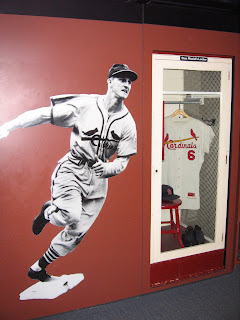
“But, that story goes A LONG WAY to describe what people did with artifacts--back before everything had this monetary value. Musial is just doing a very nice thing. These guys are driving up, and he has them—why not give it to them. It also speaks--in volumes, very nicely--to the humility of Stan Musial. He told the story on himself.”
With that--Our Conversation With John Odell--Director of History and Research at The National Baseball Hall of Fame and Museum comes to its conclusion. Being involved with Historical Artifacts all his adult life, then having the pleasure of combining that love with his passion for baseball--must bring great joy to Mr. Odell's everyday life as one of The Hall's Curators. For four days--he was nothing short of gracious with his time and energy in assisting Sohna and I. Thankfully, he accepted the assignment--passing insight and knowledge along--to the very end. Sohna and I will be forever grateful.

Our heartfelt thanks to John Odell for his personal time in enhancing our Love of The Great Game Of Baseball.

And The African Queen and I hope you, the reader, are enjoying an Inside Look At The Baseball Hall of Fame & Museum in Cooperstown, New York.
Finally--many others were involved in making our week at The Hall special. But, none of these stories, and those to come--would have been possible without the kind assistance of Brad Horn--Communications Director at The National Baseball Hall of Fame & Museum. From first contact, Mr. Horn was receptive and open to fresh ideas. Upon arrival in Cooperstown, Sohna and I didn't know what to expect. Just four short days later, we left for home having garnered many new lifetime memories--while forging some new friendships.

A SPECIAL TRIP NEVER TO BE FORGOTTEN.


PS--Tomorrow, Hall of Fame Week continues on The Nats320 Blog with a Photo Essay of the Public Displays. And, as promised--before The Regular 2008 Championship Campaign begins for Our Washington Nationals--The History of Washington, DC Baseball--through the eyes of The Hall of Fame.

Photos--Property of Nats320--all rights reserved

Friday, February 01, 2008

Chatting With The Curator (Part Two)


As Sohna and I continue our conversation with John Odell--Director of History & Research at The National Baseball Hall of Fame--we are discussing the documentation of baseball artifacts today in a booming collector's market--that many times leads to fakes.

Can you speak a little on verification? (SBF)

“If you have the ironclad provenance, who has owned it, how did that person get it—then that is the kind of thing that brings up the zeros when it comes to auctioning it off. That’s the bad side. A good side of this whole Sports Memorabilia Market is that people are valuing things in a way that they didn’t when I was a child. And, it was not until the 1980’s that people were buying and selling memorabilia that use to be owned by, used by or signed by—name your favorite ball player. Before, it was just: ‘I got a great baseball and I think you are a wonderful person, so I am going to give this to you.’ Great you respond: ‘Why don’t we trade?’ Or, the person thanks the giver and that’s the end of it.”

“Now a days, these things are being preserved for a lot of money. But, at some point, if it is preserved it can always be donated to The Hall of Fame at sometime in the future. If the artifact has not been preserved—it can’t be. So, even though we are a small fish in a very big artifact-collecting pond—the fact that these artifacts are being kept and preserved helps in the long run. But, sometimes that preservation gets lost going through dealers.”

We talked about this topic the other day. Why is it that The Hall of Fame will not get involved in purchasing artifacts? (SBF)

“When The Hall opened up in late 1938, officially dedicated in 1939—for two years prior to that people who were the original staff of The Hall—before there was a building—were contacting ballplayers saying: ‘We are creating, with the help of The National League’s Ford Frick (who was an important player in all this by giving his official stamp) collecting artifacts for a Baseball Hall of Fame and Museum. Would you please donate your memorabilia, your old stuff, your old artifacts to the museum.’ So, they contacted Walter Johnson and Christy Mathewson and Ty Cobb and Cy Young—all of these players—both old, recently retired and, I am sure, some who were playing right then. But, the push was for the older ballplayers. And these ballplayer did, they donated: ‘Here you go—here’s a bat I used. Here’s my favorite glove. Here’s my last jersey. Here are the spikes I wore.’ That was all they (ballplayers) said. They didn’t say ‘Here are the spikes I wore during this year, this time—dot, dot, dot, dot, dah (laughing).’ All the kinds of details we like to have now for verification. By this time—Christy Mathewson had died—tragically with tuberculosis. His wife donated and said this particular model was Matty’s favorite glove—that’s all she said. Today, we would have to go back, research and find the history of that glove.”


“So—that’s how we started collecting artifacts. For 40 odds years, no one really thought anything of it (collecting artifacts without documentation). Babe Ruth donated his artifacts. Willie Mays donated his artifacts. Hank Aaron donated his artifacts. These are the greats of the game who were donating artifacts. Some were donating during their playing days, others donating after they retired. We had nearly a half century of accepting donations.”

“Then, during the 80’s a memorabilia market developed. We (The Hall) had to start talking about whether we wanted to start buying these items. We can’t just ask for them any longer to have people send them to us. Thinking about the situation, the decision was made to not start paying for the artifacts for two reasons. One of which is very simple—every museum operates on a shoestring—and we didn’t have the money to buy artifacts—even if we were able to buy some. Secondly, The Hall of Fame recognized that it had made a contract with these other ballplayers over history, by saying ‘donate to us and we will be the keeper of this.’ If we started buying things now, then that would be disrespectful to that contract—a repudiation to the good faith these other players who had graciously given us their artifacts. Just imagine a player saying from back in the day: ‘If you were going to buy it….?’ You can see where this is heading. Player’s back then didn’t make a whole lot of money. They could have used that money.”


“Now, as it turned out, by us saying we wish that you would donate—we are putting these later donors in the same place as Babe Ruth, Honus Wagner, Roberto Clemente and all these other great players who had donated to The Hall of Fame. We have maintained that cache.”

“The next thing that happened was the market exploding. We would not be able to afford anything today. If we had gotten into the market when it was a low priced market—it’s just a couple of bucks for a ball--$10 for a jersey—but look at where all this headed. Just look at any online auction catalog. Its just amazing how pricey the artifacts are. We would not be able to afford it now.”

“Then, the last part of this equation: where there is money, ultimately comes fraud. By almost accidentally, not foreseeing this, by refusing to purchase items—we have also kept ourselves out of a market which is riddled with fraud. We know so much more today from FBI situations how bad the memorabilia market is. We have dealt with an FBI Agent who was a part of the baseball fraud sting operations. He said that 90-95%, maybe 99% of signed autographs out there are fraudulent. So, if you didn’t see it signed, you have to wonder. That’s just another reason why we don’t care about anything being signed (all of us laughing). We just want the artifact.”

“So many things come with the signature of authenticity—which has become a part of the story of it. There is this perception that the signature adds authenticity, making two separate issues. One is the authenticity of the item; the second is the authenticity of the signature. And, if the signature is being used to authenticate the item—then if the signature is fraudulent—the item is mostly likely fraudulent as well—leaving you with nothing. All that is a long story about how through the best of intentions, to honor the donators of the past, with the situation of the present—there being no money to purchase items—we have ended up with a great policy. Does it mean we might not get some items we would love to get—Absolutely.”


“Sometimes we also keep ‘Wish Lists’. If somebody wants to donate our way another Roberto Clemente Jersey, and the glove he wore in the 1971 World Series—(animated) That’s OK BY US!!! (Smiling). But, yes, it does mean we don’t get some artifacts we would like. Hopefully, those items will be donated in the future. There are a lot of collectors out there. Some will liquidate their collections. Some will donate some of their items before they liquidate—in order to off-set their tax position.”

Is that how the Barry Halper Collection came about? (SBF)

“The Halper stuff was a slightly different situation. First of all, Barry Halper had donated many items previously to The Hall of Fame—before the great Halper Auction. Halper actually ended up giving us the first of two Honus Wagner T-206 Baseball Cards. The Holy Grail of cards that is valued at about $2 Million, based on the last one sold. For a number of years, he was donating artifacts to The Hall of Fame and he was liquidating his big collection. His collection was so big and he was having health issues (Halper died recently of cancer). He wanted to liquidate in a controlled type of way. He wanted to convert from artifacts and memorabilia to something his family could use—cash. Nobody in his family had the passion of Barry Halper for the items—that happens to a lot of people. What he did was give us (The Hall) first dibs. Major League Baseball bought the elements that we wanted. We did not look at his collection for Babe Ruth Jerseys. We have several Babe Ruth Jerseys. We don’t need another Babe Ruth Jersey. But, there were any numbers of artifacts that we thought: ‘This is pretty cool. This item tells a good story that we don’t have.’ One of my favorites—I will be using next year on exhibit. We picked up a trophy ball—a baseball used in a game with the information painted on it--from the National Association (precursor to The National League)—the Troy Haymakers (New York) used it in a game. One of the players on that team was Steve Bayon—who was born Esteban Bayon—in Cuba.”

“All of sudden, we have a ball were this fellow played in the game and this baseball was used—The First Latin American Ballplayer in Pro Baseball History—and we have a ball from a game he participated. Now he went back down to Cuba and was one of several people who helped bring baseball to Cuba—which is neat, because it wasn’t Anglos who brought the game down to Cuba—it was Cubans who were playing in the United States who said: ‘This is a neat game. I’ll bet some compadres down in Cuba would like this game.’ So, Cubans brought the game of baseball to Cuba. That’s not something you would expect The Hall of Fame to get—unless I tell you the story about it—so you can understand why we got that item, and not another Babe Ruth item.”

It moves the story forward (SBF).

“Yes, it moves the story forward here at The Hall of Fame. That was a donation from Major League Baseball. Barry Halper couldn’t afford, quite frankly, to donate all the things to The Hall of Fame he wanted The Hall of Fame to have. But, we were able to find a way to make the process work for him, for us by taking a small selection that mattered the most to us. Halper then kept the rest to auction off in the Greatest Baseball Memorabilia Auction Of All Time.”

Do you have any situations arise where a player dies and his estate donates all his artifacts to The Baseball Hall of Fame? (The African Queen)


“Yes, we do. We have had that happen on a number of occasions in the past—although not recently. The basic handling of that type of donation is the same as any other donation—you look at it and decide whether or not it fits in with your collection. We don’t have to take the donation. We don’t have to take a bequest. You can take a portion of a bequest—if it’s OK with the executor. Usually, you can explain why we only want a part of it. We want to tell this story, the collector wanted to make sure some things were preserved—we can do part of it—we can’t do all of it. But, we would like to honor as much as possible.”

“One time we were approached from someone wanting to donate a whole bunch of baseballs. They were all signed. They were all displayed for years and they were ALL FADED. I understand that the 1960’s Mets were your favorite team—we just don’t need any more baseballs signed by guys. Then, we would have to preserve them. Basically, for as far in the future as you can imagine, that’s our mandate to preserve them for not just decades, but centuries—and that’s a tough thing to do.”

I don’t know if you are already aware of this—or it’s already on your ‘Wish List’ but Walter Johnson’s Daughter has the family scrapbook of Walter Johnson's Career—a few volumes worth. I know it exists because his Grand Son—Hank Thomas—wrote about it in his book “The Big Train.” (SBF)

“Oh!! I did not know that!! Yes, that now just got added to my list!! (Smiling)

We were talking about memorabilia sales. Sohna and I visited a few of the shops on Main Street in Cooperstown including The National Pastime Store. The prices are very high. (SBF) Sohna stating: Yes, unbelievable.


“In a market that makes no sense in many ways--I will attempt to make sense of it. There are a lot of people who come to Cooperstown and they are looking for a way to connect to their own past in a very special place. You can buy that very same mitt off eBay, but if you are buying it at that shop, which when you walk into it—and its astounding the variety and the quality of the artifacts there. (It’s impressive—it really is—Sohna). Yes, unbelievable actually. It’s a mini-museum. I think its fun to walk in there, because I see all the stuff here (at The Hall) all the time. I want to see something new!! (Animated, Sohna laughing). There are gloves, bats, pennants (There is this Opening of Dodger Stadium Pennant in that store—the same one on display here at The Hall—SBF). Yes, isn’t that great. There is a great amount of nostalgia and ambiance that they (National Pastime) are tapping into—and a lot of personal connections. If you buy that glove in Cooperstown, let’s say the very glove you had as a kid, and find it walking down the street here—that’s worth instantly—infinitely more than anywhere else because of where to just found it.”

“There is that chance, you also saw that glove with your dad—here visiting The Hall. And, it would mean so much more to purchase a similar item here. (National Pastime) is a great store. They have beautiful trophies there, the decorative arts are lovely. I find that store infinitely more interesting than the other handful of baseball card stores. But, I have always been more of an artifact guy than baseball card guy. Others are, but I am not a card guy.”

Let's step back to the storage of artifacts here at The Hall. How are things preserved here? (SBF)

“We do a couple of things. We maintain the temperature, humidity and light, and we reduce handling. Those are the enemies to artifacts. Those are the enemies to all artifacts, not just us. It is what every museum and every collector should be doing. The humidity and temperature must remain low and constant, fluctuations are worse. Its worse to be fluctuating than to be relatively a little bit higher or lower in humidity. They must be stable. We not only have extensive air conditioning and heating—but also backups. We keep track of all of that. There are recorded graphs, which can be monitored. If we start seeing things going up and down—we know something needs to be addressed.”


“The artifacts, as you two noticed, are almost all in boxes—with the exception of those items which are out for photographing. This makes it easier to stack them. Now you can get stacks of gloves on top of each other—instead of having more space to stretch them out. Also, this keeps light off the artifacts. UV light is the worse, people generally know that now. But, all light is bad. UV light will cause items to fade out and damage them sooner. It’s a higher intensity light and puts more energy into the artifact and energy is bad as it speeds up chemical reactions. All light will do that, eventually. So, we must keep the light low and covered in boxes. Also, the boxes are acid free—which also reduces chemical reactions. The boxes provide mini-environments.”

“You may recall a few years ago—there was a major power outage—the entire northeast grid shutdown for a couple of days—which is not a good thing at all. Our backups came on right away—that’s fine. Then, we ran out of fuel, and there was no electricity to get the fuel out of the pumps—so it shut down. Not Great—as we are back down again. Fortunately, the artifacts were in a well-insulated room in those acid free boxes—the fluctuation within each box—was less than the fluctuation in each room—which was less than the fluctuation out of the storage room. This enveloping type of protection—helped preserve the artifacts.”

“And then reducing the handling, by having on each box the identification number for each item and a brief description. This allows us to find easily the artifact you want, and not these others. We don’t have to go through each box—hunting for labels, and hunting for numbers. No, just go straight to the box, pull it out and there is the item you need.”

And all the boxes are lined with Acid-Free Paper? (The African Queen)

“Yes, that is correct.”

And it’s very limited who actually gets to touch any item? (SBF)

“Yes, absolutely. As you saw on our tour—I was wearing my gloves. It keeps the dirt from my hands off the artifact, and baseball artifacts are dirty. So, this keeps the dirt from transferring from my body to the item.”

Back to the artifact storage boxes—does someone check those items on a regular basis—just to be sure they are being preserved correctly? (SBF)

“No. We know that if we have the room temperature under control—the boxes will be OK. They are acid free boxes, with acid free paper—so if we have the greater environment fine—then the inner environment is fine.”

What qualifies someone to see an artifact at The Baseball Hall of Fame? (SBF)

“One thing that qualifies you instantly is if you donated the item. So, Ralph Kiner can see his bat!! (All of us laughing). But, don’t come up to ask for it in the middle of induction weekend. We don’t have the staff to do it at that time. We are busy doing other things.”

A donor actually comes back to see their items? (The African Queen)

“Oh yeah!! (excited)—They do. They are very interested in that!! They want to show their wife, son or daughter. This is a tie that they (donator) have with baseball and its something we want to honor. Guess what? Maybe they have other things or maybe we have others—but we have to build that relationship we have with that person. It’s a big part of who we are.”

“If you are a scholar, and scholarship in baseball is different from scholar in medicine--there are a lot of baseball scholars who are doing worthwhile other things in their life. You don’t have to be a full-time baseball scholar, but if you are a member of SABR, The Society of American Baseball Research, and you are doing research on uniforms and want to compare uniforms you have come across with those of The Hall—lets say you are looking for makers, or you are looking for how The Cardinals Uniform stitching has changed with their great Cardinals and bat logo. If it’s a legitimate project and you are doing real research—then its something we can accommodate.”

“Unfortunately, our situation is similar to other museums. If you are a fan of something, and wish to see more than what we have on exhibit—we probably can’t do that. ‘I want to see all The Yankee stuff that you don’t have on exhibit?’ Gee—that would be nice but we simply can’t do that. But, come back in a couple of years and we might have changed out some of our Yankees Exhibit Cases.”

But, when Joe Scholar shows up from SABR and wants to compare that Cardinals Uniform—you may bring that item to them—but they will not be necessarily touching it themselves? (SBF)

“We would bring it to them, and they would have to wear the gloves, set up in a particular place, where under supervision—they can do their work. Once they were done with their work—we would take the item away.”

Just to be clear—no one can show up and say I want to see everything under the sun? (SBF) Someone will try. (The African Queen)

“Its just not possible.”

That concludes Part Two of our chat with John Odell--Director of History & Research at The National Baseball Hall of Fame. Tomorrow--in the final installment--its all about the Displays, Induction Plaques and why many players of today--actually don't come visit The Hall--often.

Photos--Property of Nats320--all rights reserved